

Few outdoor experiences compare to relaxing beside a warm campfire as stars emerge across the evening sky. A crackling blaze provides warmth, bright light, delicious cooking heat, and a natural gathering place for sharing stories with family and friends. However, building an open fire in nature carries serious responsibility. An uncontrolled spark or poorly built blaze can endanger wildlife, damage forests, and create severe safety risks. Learning how to start a campfire safely step by step is a foundational skill every beginner must practice before heading out. With careful site selection, proper fuel sizing, and disciplined extinguishing habits, you can enjoy a comforting blaze with complete peace of mind. Here is your definitive, field-tested guide to building and tending a safe outdoor campfire.

Step 1: Checking Regulations and Choosing a Safe Fire Site
Before gathering a single twig, you must confirm that campfires are legally permitted in your camping area. During dry summer and autumn months, land management agencies often issue strict fire bans to prevent accidental wildfires. Check local ranger station alerts, campsite notice boards, or park websites before striking any match.
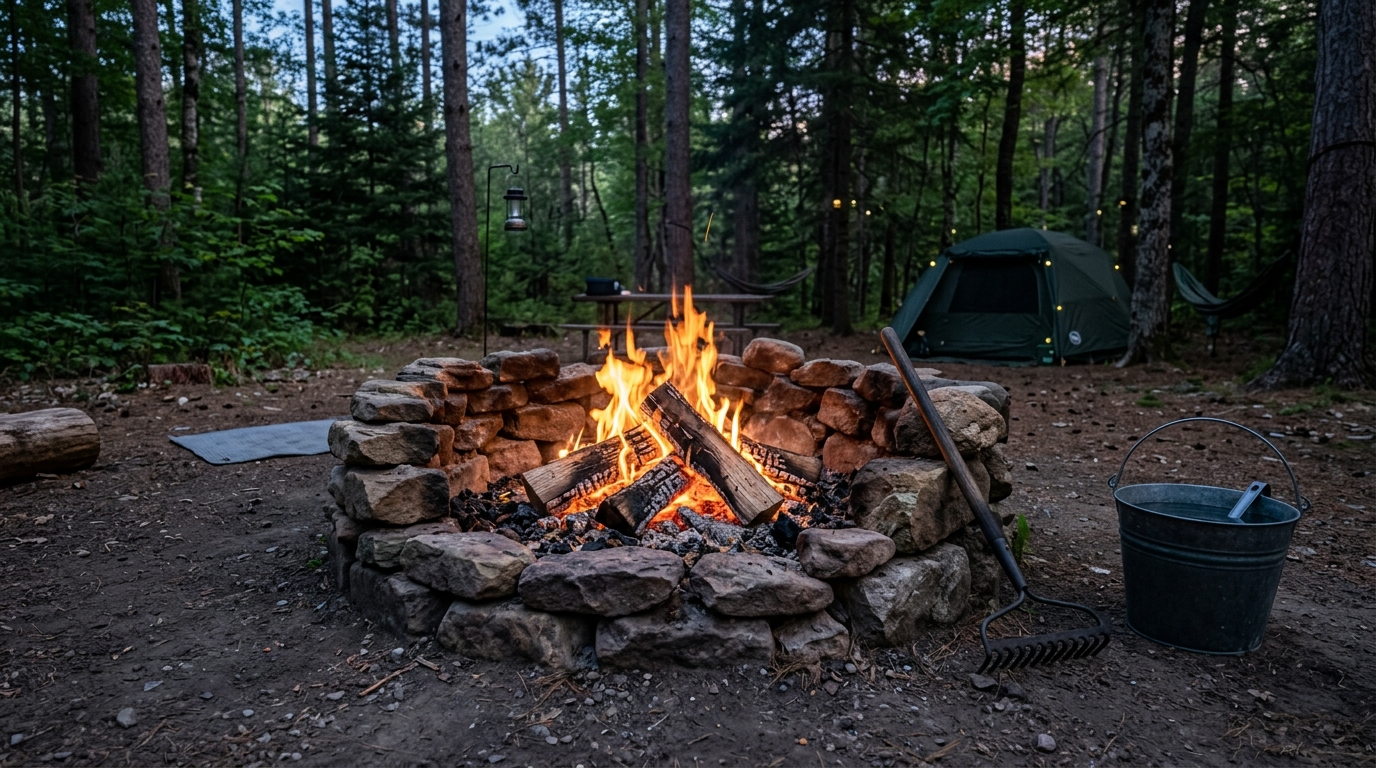
Always use an existing designated metal or stone fire ring whenever available at established campgrounds. These rings are built to contain glowing coals and prevent heat from traveling into underground root systems. If you are camping in a backcountry area where fires are allowed without rings, choose a wide patch of bare mineral soil far away from vegetation.
- Clear a ten-foot safety circle around the pit down to bare mineral earth, clearing all dry pine needles, dry leaves, and twigs.
- Look straight up to verify there are no low-hanging tree branches within twenty feet directly above the pit.
- Never build a campfire against dry logs, rotting stumps, or large tree roots that could smolder underground undetected.
- Keep a bucket of clean water and a metal camp shovel right beside the fire ring before lighting the first match.
Campfire Fuel Sizing and Preparation Guide
| Fuel Category | Thickness / Size | Best Natural Materials |
|---|---|---|
| Tinder | Toothpick to thread thin | Dry birch bark curls, dead pine needles, dry grass, wax cotton balls. |
| Kindling | Pencil to finger width | Small dry twigs, snapped dead pine branches, split wood slivers. |
| Fuelwood | Wrist to forearm width | Split hardwood logs, seasoned dead oak, birch, or dried pine logs. |
Step 2: Building an Efficient Airflow Fire Structure
Understanding how to start a campfire safely step by step requires choosing a structure that balances fuel and oxygen. Throwing a jumble of wood together chokes the airflow and creates dense, coughing smoke. Two dependable structures work best for beginners:
The Teepee Lay (Best for Quick Flame and Warmth): Place a loose softball-sized mound of dry tinder in the center of your fire pit. Lean small kindling sticks against one another around the tinder, creating a small conical cone. Leave a distinct opening on the upwind side so breeze can reach the tinder and you can easily touch a match to the center. As the kindling catches, add slightly thicker kindling sticks around the cone.
The Log Cabin Lay (Best for Cooking and Long Coals): Place two medium firewood logs parallel to each other inside the fire ring. Lay two more logs perpendicularly across their ends to create a neat wooden square chimney. Build your small tinder and kindling cone in the center of the square. As the fire climbs, the exterior logs catch evenly, collapsing inward into a flat, long-lasting bed of cooking coals.

Step 3: Lighting and Tending the Blaze
Kneel down on the windward side of your fire ring so your body shields the flame from heavy gusts. Use a long-reach lighter, stormproof matches, or a ferrocerium spark rod to light the central tinder in two or three spots. Watch closely as the tinder flares and passes heat into the kindling above.
Gently blow at the base of the fledgling flame using slow, steady breaths. Steady oxygen feeds the glowing embers. Once the kindling is burning vigorously, begin adding finger-thick sticks one at a time. Never dump an armload of heavy wood onto a young fire; heavy logs crush delicate kindling and starve the blaze of oxygen.
Keep the fire at a manageable size. A large bonfire is difficult to control, consumes massive amounts of wood, and creates dangerous updrafts. A compact, knee-high fire provides plenty of warmth and keeps flames safely within the metal fire ring.
Step 4: Extinguishing Your Fire Completely (The Cold-Out Test)
Knowing how to start a campfire safely step by step is only half of the skill; knowing how to put it out completely is what protects our wilderness areas. Never leave a fire unattended, even for five minutes, and begin your extinguishing routine at least twenty minutes before turning in for the night or leaving camp.
- Drown with Water: Pour a generous bucket of water over the entire fire pit. The coals will hiss loudly and send up billows of white steam.
- Stir Ashes and Coals: Use a metal camp shovel or sturdy stick to stir the wet ashes, breaking apart glowing embers and scraping the soil beneath the ring.
- Drown Again: Pour a second bucket of water over the pit, wetting every log and piece of charcoal thoroughly.
- The Bare Hand Touch Test: Hold the back of your bare hand two inches above the ashes. If you feel any radiating warmth, it is not out. Touch the coals directly. If the coals are not cold and soggy, repeat the pour-and-stir process until completely cold.
Frequently Asked Questions
Can I burn green branches cut from live trees?
Never cut living branches from trees. Live green wood contains up to seventy percent moisture, meaning it will not burn cleanly, generates overwhelming black smoke, and damages living forest ecosystems. Always collect dead, downed branches.
What should I do if the firewood is damp from rain?
Use your pocket knife to shave off the wet outer bark of small sticks to expose dry inner wood fibers. You can also carry a few commercial wax firestarter squares in your camp kit to provide a sustained 10-minute flame that dries out damp kindling.
Seven Common Campfire Mistakes Beginners Make
Even well-intentioned outdoor enthusiasts can make simple errors that lead to frustration or safety hazards around the fire pit. Being mindful of these common mistakes ensures your campfire experience remains safe and stress-free:
- Trying to Light Large Logs First: Wood will not catch fire without sufficient sustained heat from smaller sticks. Always build a robust foundation of dry kindling before introducing medium or large firewood logs.
- Suffocating the Core with Too Much Wood: Fire requires oxygen just as much as fuel. If you pack logs too tightly against each other, you cut off airflow, creating suffocating smoke and causing the flame to die out.
- Using River Rocks as Pit Rings: Never collect wet rocks from riverbeds or creeks to build a fire ring. Trapped moisture inside porous river stones turns into steam when heated, causing rocks to crack or explode with sharp fragments.
- Leaving the Fire Pit Smoldering: Many campers think that leaving a bed of low-burning embers is harmless. However, a sudden midnight wind gust can whip embers into dry leaves hundreds of feet away. Always extinguish the fire to cold-out status.
- Burning Toxic Trash and Plastic: Burning disposable plastic plates, snack wrappers, or aluminum cans releases toxic fumes into the forest air and leaves behind unsightly, non-biodegradable debris.
Campfire Etiquette and Leave No Trace Principles
Outdoor recreation depends on community respect and environmental stewardship. When enjoying an outdoor campfire, be considerate of neighboring campsites. Keep late-night conversations at a polite, quiet volume so nearby campers can sleep peacefully under the stars. Keep smoke down by burning only clean, well-seasoned dry wood, and never bring firewood from outside the local region to prevent the spread of invasive tree pests.
Campfire Safety for Lifelong Memories
Practicing how to start a campfire safely step by step transforms your camping trips into cozy, relaxing retreats. By selecting cleared fire rings, organizing your tinder and kindling beforehand, and performing the cold-out touch test every evening, you protect our public lands while enjoying the timeless magic of a wilderness fire. Gather your kindling, keep your safety water ready, and enjoy relaxing under the starry night sky!
For official park guidelines and wilderness safety bulletins, refer to the National Park campfire safety regulations.